
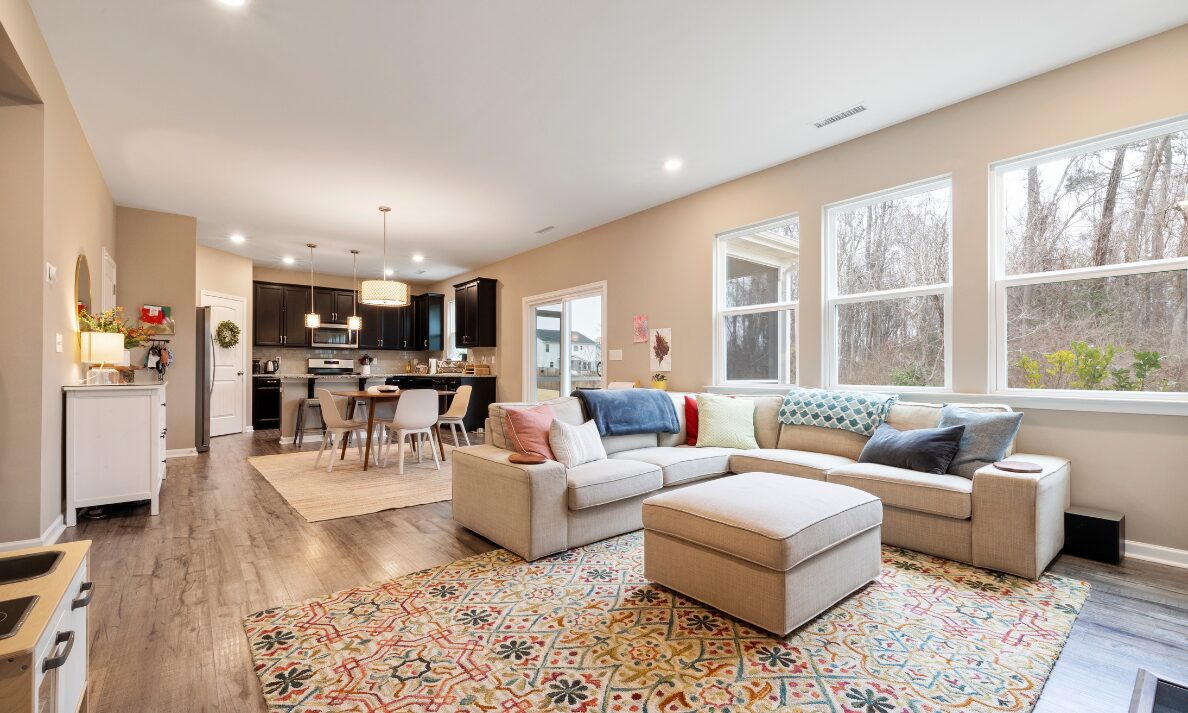
Stone is a town that quietly gets on with things. No dramatic headlines, no boom-and-bust cycles – just steady demand, strong schools, and a community that people actively choose to move into. But right now, something significant is happening beneath the surface of the Stone property market, and if you are buying, selling, or simply keeping an eye on your home’s value, it is worth understanding what is coming.
A pipeline of approximately 2,000 new homes is either approved, under construction, or in advanced planning across the ST15 area. That is a substantial number for a town of Stone’s size, and it raises a fair and important question: what does it mean for prices?
The development story shaping Stone right now
The schemes in question span several distinct parts of the town. The Pirehill and A34 corridor, Eccleshall Road, Stonefield Works on Longton Road, Uttoxeter Road, and sites along the High Street all feature in the current planning picture.
These are not rumours or distant aspirations. Many of these schemes are either consented to or at an advanced stage, which means new stock will begin entering the market in meaningful volumes over the next two to three years.
For anyone thinking about the Stone property market in 2026, this is the single biggest structural factor to understand.
What the data says about Stone prices right now
Before looking ahead, it helps to understand where Stone stands today. Average sold prices in Stone currently sit in the range of £281,087 to £295,000, based on the latest 2026 transaction data. That figure comfortably outperforms the wider Staffordshire average, where price growth has softened noticeably over the same period.
Buyer demand in Stone remains firm. Constrained resale supply has kept competition healthy, and the town continues to attract families relocating from larger urban centres, particularly those drawn by the grammar school catchment and the quality of life the area offers.
This context matters, because it tells us that Stone’s market is not fragile. It enters this period of new supply from a position of relative strength.
Where new-build competition could have the most impact
Not all parts of Stone will be affected equally. The areas most likely to feel pricing pressure from new supply are those closest to the major development sites.
ST15 0 and the western edge of Stone
Parts of the ST15 0 postcode, particularly around the western approaches to the town and the Uttoxeter Road corridor, will see the most direct competition from new-build stock. Developers typically price new homes at a premium for specifications, but they also offer incentives – part-exchange schemes, deposit contributions, and mortgage support – that can pull buyers away from the resale market.
Sellers in these areas should be mindful that buyers will have a genuine choice between new and resale, and pricing strategy will need to reflect that. Overpricing in this environment carries more risk than it would in a supply-constrained market.
Stonefield Works and the Longton Road area
The Stonefield Works site on Longton Road represents one of the more significant brownfield opportunities in the town. Regeneration of this kind can have a dual effect: it brings new stock to market, but it can also improve the wider perception and desirability of a neighbourhood over time.
For existing homeowners nearby, the medium-term picture may be more positive than the short-term one. Early phases of large developments can create uncertainty, but completed, well-designed schemes often lift surrounding values.
Where established homes are likely to remain resilient
This is where the picture becomes more encouraging for a significant portion of Stone homeowners.
Walton, Yarnfield, and Aston-by-Stone
These three areas share a set of characteristics that make them structurally more resilient to new-build competition. School catchments – particularly access to the grammar schools – continue to drive strong demand from families who are not simply looking for a new home, but for a specific address.
Resale stock in Walton, Yarnfield, and Aston-by-Stone is limited by nature. These are established, predominantly residential neighbourhoods where turnover is relatively low. New-build development is not being proposed at scale in these micro-markets, which means supply will remain constrained even as the broader town pipeline grows.
Detached and larger semi-detached family homes in these areas have consistently attracted competitive interest, and that dynamic is unlikely to change materially in 2026 and beyond.
What this means if you are thinking of selling:
The question many homeowners in Stone are quietly asking is whether to list now, before more new stock comes forward, or to wait.
The honest answer depends on where your property sits. If you own a home in Walton, Aston-by-Stone, or Yarnfield, the catchment and character of your location provide a degree of insulation. Timing is less critical, though acting ahead of peak new-build completions is still a sensible approach.
If your home is closer to the major development corridors, listing sooner rather than later gives you the clearest run at motivated buyers before developer incentives begin competing for their attention.
In either case, an accurate, up-to-date valuation is the essential starting point. The Stone property market in 2026 rewards sellers who are well-informed and realistically priced.
Making the most of a market in transition
Markets in transition create opportunity as well as uncertainty. Buyers who understand which areas offer long-term value – and why – are better placed to make confident decisions. Sellers who understand the competitive landscape can position their homes effectively and avoid the cost of sitting on the market too long.
At Belvoir Stone, we work with homeowners and buyers across the full ST15 area, from the established villages to the town centre and beyond. Our knowledge of local pricing, school catchments, and the development pipeline means we can give you advice that is specific to your property, not just the town as a whole.
If you are considering a move or simply want to understand what your home is worth in the current climate, we would be glad to help.
Book a valuation with Belvoir Stone today and get an accurate, no-obligation assessment of your property’s value in the 2026 market.
Have questions about buying or selling in Stone? Get in touch with the Belvoir Stone team directly – we are here to help you navigate the market with confidence.