

While Nottingham boasts one of the most sophisticated public transit systems in the UK, thanks in large part to the long-standing Workplace Parking Levy funding tram extensions and bus fleets, the city’s road network remains a major pinch point. Between major arterial routeslike the A60 (Mansfield Road), the A52 corridor, and the Trent crossings, gridlock is reshaping where tenants want to live.
Understanding how traffic congestion is quietly shifting local tenant migration is essential for future-proofing your buy-to-let portfolio.
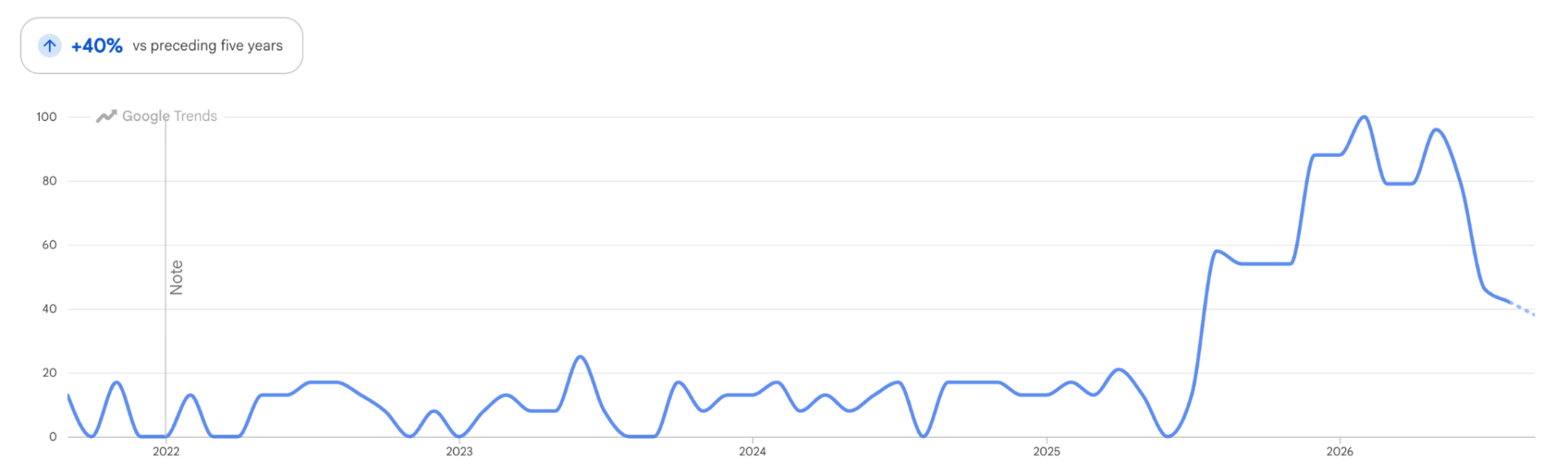
Above: Google searches for ‘Traffic in Nottingham’ have increased by +40% in the past 5 years – showing a growing interest in traffic news and levels around the city – with 2026 seeing the peak of this interest.
Where congestion is at its worst
Certain corridors into the city are notoriously prone to morning gridlock. Tenants relying on cars in these areas face daily frustration, which directly impacts long-term retention rates.
- The Southern River Bottlenecks (A52, Clifton Bridge, Trent Bridge): Crossing the River Trent into the city from the south is a multi-lane exercise in patience. Commuters heading in from outer southern postcodes face significant delays during peak hours.
- The Northern Arteries (A60 Mansfield Road / Hucknall Road): Inbound traffic from northern suburbs stacks up heavily as multiple feeder roads funnel into single routes toward the city centre.
- The QMC/Ring Road Junction: Serving the Queen’s Medical Centre and the University of Nottingham, this hub regularly grinds to a halt during shift changes and rush hours.
TomTom Traffic Index & DfT Annual Road Traffic Statistics: DfT road sensor data confirms the A52 Clifton Bridge and A60 Mansfield Road handle upwards of 60,000 vehicles per day, with peak-hour commute delays increasing journey times by up to 220% compared to off-peak hours.
| What this means for landlords: Properties situated deep within these bottlenecked vehicle corridors often suffer from higher tenant turnover among working professionals. If a tenant’s 15-minute drive turns into a 50-minute crawl every morning, they will likely seek alternative housing options when their tenancy ends. |
|---|
Where tenants are moving
Tenant preference is noticeably migrating toward areas that bypass car dependency altogether or sit on the right side of the transit grid.
1. The tram-line beneficiaries (Beeston, Hucknall, Chilwell)
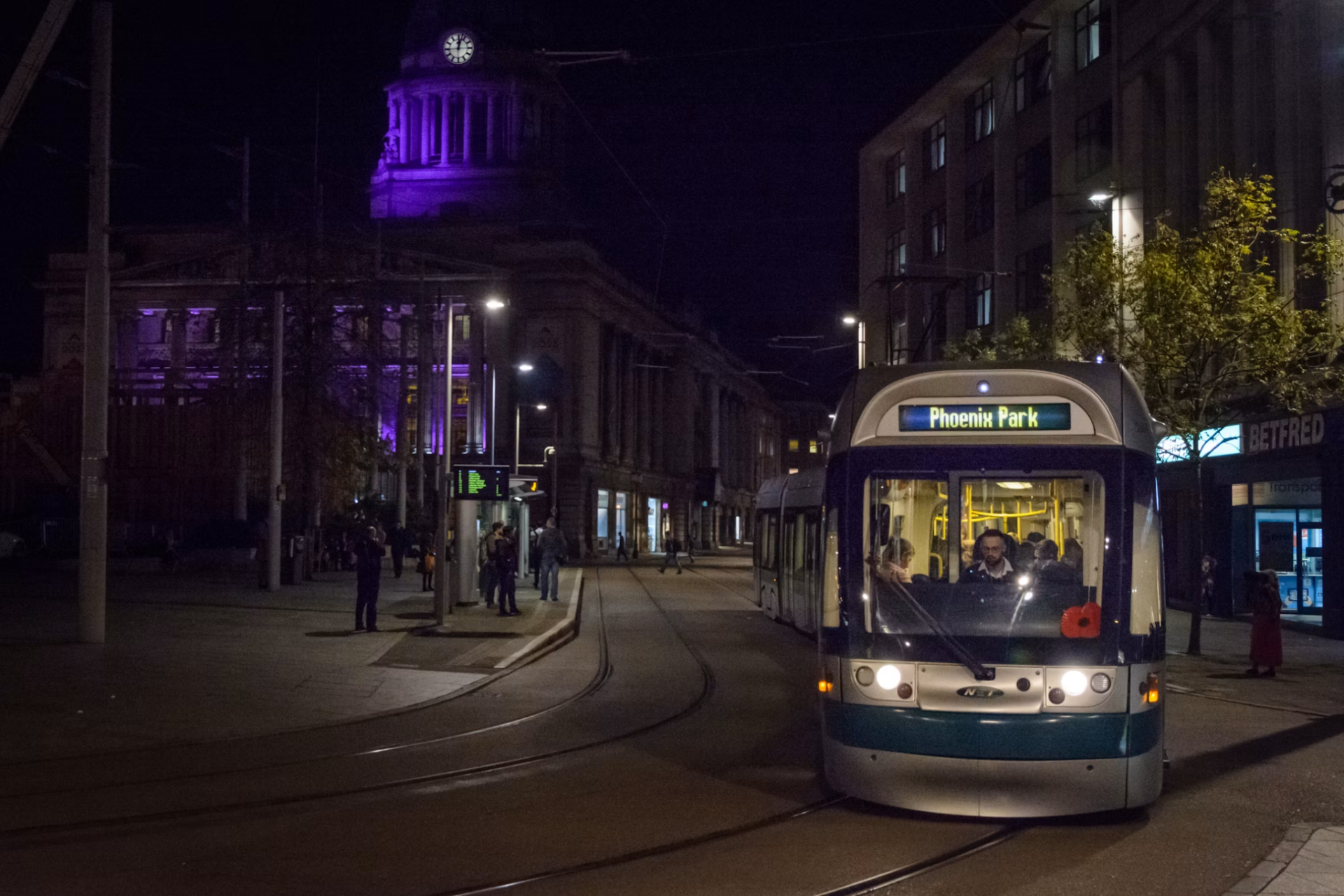
The Express Transit (NET) tram network acts as a buffer against congestion.
Zoopla & Rightmove Rental Index data shows properties within a 10-minute walk of NET tram stops average 7 to 12 days fewer on the market (lower void periods) compared to non-transit-connected suburban listings.
- Beeston (NG9): A premier target for professional and academic lets. Tenants can travel directly to the QMC, University Park, or the city centre without touching a steering wheel.
- Hucknall (NG15): Offers an attractive combination of lower purchase prices, tram access, and direct rail lines. It consistently attracts commuters looking to bypass northern arterial traffic.
2. The walkable & cycle connected hubs (Sherwood, Mapperley, West Bridgford)
- Sherwood & Mapperley (NG5 / NG3): While Mansfield Road gets congested, Sherwood’s high density of independent amenities means young professionals can handle daily life locally, relying on high-frequency bus corridors for city centre access.
- West Bridgford (NG2): Despite river crossing delays for drivers, West Bridgford remains highly desirable due to its self-contained infrastructure, direct cycling routes into the city, and rapid bus connections.
How traffic migration impacts your yields & strategy
As traffic dynamics continue to influence tenant migration, landlords should adapt their strategy in three key ways:
| Landlord Focus | Traffic Impact | Strategic Action |
|---|---|---|
| Tenant Demographics | Drivers are increasingly seeking suburban units with off-street parking. National housing census and ONS survey data confirm that over 57% of private renters in England are now over the age of 35, driving demand away from urban flats toward suburban family homes with parking and garden space. | Target tenants who commute outward (e.g., toward M1 junctions) rather than into the city core. |
| EV & Micro-Mobility | Workplace Parking Levy costs push workers toward electric vehicles, cycling or public transport. | Install EV chargers or secure bike storage to instantly make properties more attractive. |
| Yield vs. Capital Growth | Suburban locations with poor transport links may show high nominal yields, but face risk from longer void periods. | Prioritise postcodes within a 10-minute walk of a NET tram stop for resilient capital growth and minimal voids. |
Bottom line for Nottingham landlords
Traffic congestion in Nottingham isn’t just a daily nuisance; it acts as a direct economic filter for the rental market.
Additionally, major roadworks scheduled up until 2029, particularly at Nottingham Knight Island and along Western Boulevard, are expected to cause widespread traffic congestion. Coupled with rising fuel costs, these disruptions will further accelerate tenant demand for electric vehicles and properties equipped with EV charging infrastructure.
Properties that offer a frictionless commute – be that through tram connectivity, high-frequency bus lanes, or self-contained walkable neighbourhoods, will continue to command higher rents, attract reliable tenants, and enjoy lower void rates. When evaluating your next portfolio addition, consider mapping the public transport links as carefully as the yield calculations.