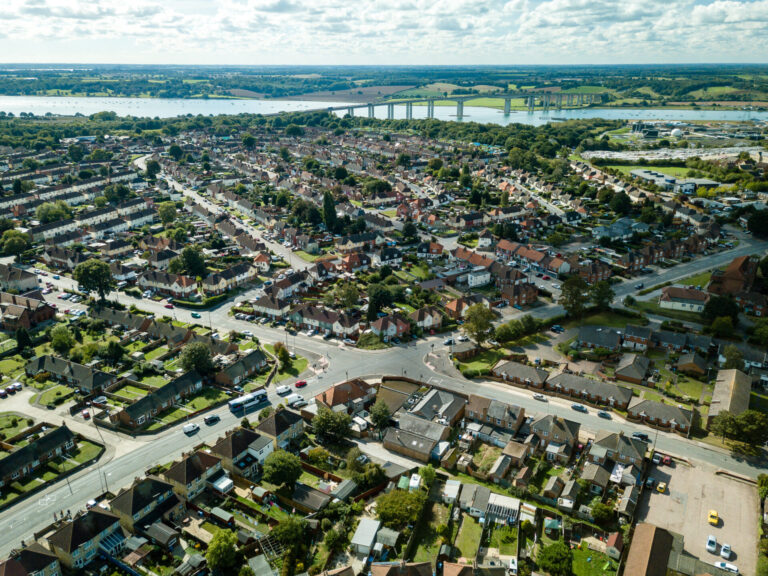

How to Decide Whether to Rent or Buy in Ipswich
By Emma Garnham, Branch & Lettings Manager · 7 minute read
There isn’t a single right answer to whether renting or buying is “better” - not in Ipswich, not anywhere. It depends on how long you’ll stay, how much of a buffer you have behind you, and how much you value flexibility over control. This guide sets out the questions that actually decide it, rather than a verdict, because your own numbers will look nothing like anyone else’s.
Most “rent versus buy” articles promise a clean answer. Almost none of them can actually give you one, because it depends on your deposit, your mortgage rate, how long you’ll stay, and what happens to prices while you’re there - none of which we, or anyone else, can know on your behalf.
What we can do is set out the questions that genuinely decide it and be honest about where the trade-offs sit. This guide is written for Ipswich in August 2026. It won’t tell you which option is cheaper - be wary of anyone who tells you that with confidence - but it should help you work out which is right for you.
Why “which is cheaper” is the wrong first question
It’s the question everyone starts with, and it’s the hardest one to answer honestly, because the true cost of either option depends on details unique to you. Your deposit size changes your mortgage rate. A property’s age changes what you’ll spend on repairs. How long you stay changes whether the fixed costs of buying and selling ever pay for themselves. Two people buying the same house on the same day can end up with genuinely different costs once their own circumstances are factored in.
As a rough illustration: ONS records average private rent in Ipswich at £989 a month in May 2026, and a typical first-time buyer’s mortgage payment on an average local purchase can land in a broadly similar range once a realistic deposit and today’s rates are factored in. That closeness is common nationally too, and it’s exactly why the monthly figure isn’t the place to start - once you add real maintenance, insurance, and the timing of when you buy or sell, the true cost can swing by more than that gap in either direction, depending on choices that are yours alone to make.
Six questions to work through, honestly
These matter more than any spreadsheet, and they work in roughly this order.
- How long, honestly, will you stay? Under about five years, the fixed costs of buying and selling are hard to recover. The longer you stay beyond that, the less they matter.
- Do you have the deposit and the costs on top, without emptying your savings? Buying costs more upfront than most first-timers expect once fees, surveys and moving costs sit alongside the deposit itself.
- Could you comfortably absorb a higher rate at your next mortgage renewal? Lenders stress-test this when they assess you. It’s worth running the same test on yourself before you commit.
- Will you still have a real buffer in the bank after you complete? A home bought with nothing left behind it turns an ordinary repair into a crisis.
- Is your income secure enough that a failed boiler is an inconvenience rather than a setback?
- Which do you want more — the freedom to leave on two months’ notice, or the freedom to knock a wall down?
Answer these honestly rather than optimistically, and a clear direction usually emerges faster than any calculator would suggest.
Want to talk through your own numbers rather than averages?
We let and we sell from the same office, so we’ve no particular stake in which way you go — only in you working through it properly. Bring your actual deposit, your actual mortgage quote, and we’ll help you think it through.
Three scenarios
The first move. You’re renting a one-bedroom flat, you’ve got most of a deposit together, and you’re wondering whether to keep saving or start looking. The honest answer is that buying costs considerably more upfront than renting once fees and moving costs sit alongside the deposit - so if reaching that point would empty your savings entirely, another year of renting while you build a genuine buffer is usually the cheaper decision, not the timid one.
The growing family. You need three bedrooms, you’re thinking about schools, and you expect to stay ten years or more. This is the scenario where buying tends to make the most sense. A long time horizon comfortably absorbs the upfront costs, years of rent increases no longer compound against you, and stability has a value no spreadsheet fully captures. The caution here is affordability at your next mortgage renewal, not affordability today.
The downsizer. You own outright and you’re wondering whether to sell and rent instead. Selling releases the full value of the property as cash, which suits some people very well and others very badly - it has tax, benefits and inheritance consequences, and it isn’t a decision to take from a blog post, including this one. Speak to an independent financial adviser before you list, and if you need a number for one - just ask.
What renting gives you that buying can’t
– Flexibility. Since 1 May 2026, every assured tenancy in England is periodic, and you can leave on two months’ notice - a legal right, not something you have to negotiate.
– No responsibility for repairs. A failed boiler is a phone call, not a bill.
– A far smaller upfront commitment. No deposit tied up in bricks and mortar, no exposure to a falling market.
– More security than renting used to offer. Section 21 no-fault eviction has gone. A landlord now needs a stated legal ground to end your tenancy.
What buying gives you that renting can’t
– Control. Decorate, keep a pet, extend, without asking anyone’s permission.
– Equity. Part of every mortgage payment builds an asset that’s yours, rather than paying for someone else’s.
– Payment certainty within your fixed term. A fixed-rate mortgage doesn’t move for the length of the fix, in a way a landlord’s annual rent review can still work against you even under the new rules.
– No risk of the property being sold from under you. The single most common reason tenants end up moving when they didn’t plan to.
Ashley Evans, Sales Manager, Belvoir Ipswich, says:
“The buyers who do best are the ones who’ve decided how long they’re staying before they look at a single property. It changes what you buy, not just whether you buy.”
The Ipswich picture, without pretending to predict it
Ipswich isn’t one market. The town centre and the streets around the station suit renters who want to be close to everything and don’t want to be tied down - a meaningful share of that stock turns over every year. Areas like Rushmere St Andrew, Kesgrave and Martlesham draw a more settled, family-buyer market, close to well-regarded schools and with easy access back into town. The Waterfront sits somewhere between the two: increasingly popular with both renters and buyers, and still developing its own character as regeneration continues.
The trains into London from Ipswich station make commuting realistic for both tenures, which keeps demand broad rather than concentrated in one type of buyer or renter. What we’d steer you away from is reading too much into short-term price movements in any one of these pockets - a few streets can move quite differently from the town-wide average in a given year, which is one more reason a personal decision shouldn’t be built on a headline figure.
A straightforward way to actually decide
- Get a mortgage agreement in principle, even if you’re not sure you’ll use it. It turns “average figures” into your own real number.
- Speak to an independent financial adviser about what you could genuinely afford if rates rose at your next renewal, not just what you can afford today.
- Work from your own numbers, not an average - your actual deposit, your actual quote, the actual property you’re looking at, not a townwide figure.
- If you’re still unsure, renting for another year while things settle is a legitimate decision. It is not a default failure, and it is very often the right call.
FREQUENTLY ASKED QUESTIONS
Is it better to rent or buy?
There’s no universal answer — it depends on how long you’ll stay, how much of a financial buffer you have, and how much you value flexibility over control. Buying tends to suit longer time horizons and settled circumstances; renting tends to suit shorter horizons, tighter savings, or a genuine need to stay flexible. The right answer is personal, not a townwide average.
How long should I plan to stay before buying makes sense?
As a general guide, several years — commonly cited as five or more — gives you a reasonable chance of the upfront costs of buying and selling paying for themselves. Below that, the fixed costs are harder to recover. The exact point depends on your deposit, your mortgage rate and how the local market moves, which is why it varies from one buyer to the next.
What should I ask myself before deciding to buy?
Start with how long you realistically expect to stay, whether you have the deposit and the costs on top without emptying your savings, and whether you could absorb a higher rate at your next mortgage renewal. Then check you’d still have a genuine buffer left after completing, and be honest about how much you value flexibility versus the ability to make a property truly your own.
Is renting a waste of money?
Not in any meaningful sense — it buys you flexibility, no responsibility for repairs, and since the Renters’ Rights Act 2025 came into force, more legal security than renting has offered in years. “Wasted” assumes buying is automatically the better outcome, which depends entirely on your own circumstances, time horizon and the state of the market when you eventually buy or sell.
Should I wait to buy in case house prices fall further, or buy now in case they rise?
Trying to time the market is a gamble even for professional investors, and nobody can do it reliably on your behalf. A more reliable approach is to decide based on your own readiness — your deposit, your income security and how long you plan to stay — rather than a bet on which direction prices move next.
We let and we sell from the same office in Ipswich, which means we’ve no particular interest in which answer you reach — only in you reaching it with a clear head and the right questions in front of you. Come and talk it through before you commit either way.
See rentals in Ipswich Register as a buyer
“I sit on both sides of this conversation most weeks, because we let and we sell from the same office. What surprises people is how rarely the monthly numbers are actually the thing that decides it. Nobody lost anything by renting for another twelve months. If you’re weighing this up, work out your realistic time horizon and your real buffer first. Everything else follows from those two things.”
Emma Garnham, Branch & Lettings Manager, Belvoir Ipswich